What is BioSolve® Pinkwater?
No. Pinkwater is not a solvent and is not formulated with any hydrocarbon solvents. It is a water-based formulation of surfactants and performance additives specifically engineered to solubilize hydrocarbons, such as gasoline, diesel fuel and other light petrochemicals. Pinkwater holds these hydrocarbons in a very stable emulsion that allows contractors to “clean-up” oil with water.
Pinkwater is not a hazardous material. Pinkwater is considered non-hazardous as defined by CERCLA, according to OSHA, Massachusetts Right to Know Law and California Prop 65. Pinkwater is TSCA compliant.
A water-based product for hydrocarbon (oil, fuel, petrochemical) clean-up has several important advantages:
- Water-based products are environmentally friendly, making all aspects of the project safer for workers, gentler on the environment and, in many cases, less expensive.
- Working with Pinkwater requires no specialized application equipment or PPE as is often required when working with solvent-based cleaners.
- Pinkwater can be used in enclosed workspaces without risk of fire and explosion. In fact, Pinkwater is often used to reduce flammable vapors to reduce risk of fire and explosion.
- Following clean-up with Pinkwater, hydrocarbons can be easily separated from the effluent, potentially reducing disposal costs and on some large projects may support the reclamation of hydrocarbons
The word “surfactant” is a contraction of “surface active agent”. Very simply, surfactants are a class of chemical products that allow oil and water to mix. A surfactant molecule has two ends; one end is attracted to oil, the other end is attracted to water. When Pinkwater solution comes in contact with “oil” (e.g., gasoline, diesel fuel) it pulls the oil into the solution, forming an emulsion. That principle works in the soil as well as on many hard surfaces, such as roadways, shop floors and on process equipment.
Pinkwater is most effective on light hydrocarbons, such as gasoline, diesel fuel, and similar light petrochemicals. And while Pinkwater will work on heavier products, such as heavy fuel oil, and paraffin, it will take longer to work and require more agitation and mixing to be effective. Pinkwater will not work on chemicals that are water soluble, such as light alcohols (methanol, ethanol and propanol), ammonia and many ammonia compounds, acids, alkalis nitrates, sulfates, and chlorides to name some of the more common chemical families.
Pinkwater does not contain any bacteria, enzymes or active biological material. However, Pinkwater will accelerate bioremediation by making hydrocarbon molecules more readily digestible by bacteria that are naturally present in the environment. In fact, hydrocarbon-degrading bacteria naturally produce surfactants in order to facilitate the digestion of hydrocarbons. Therefore, the role of Pinkwater in bioremediation is to accelerate this naturally occurring process.
Using BioSolve Pinkwater?
No, Pinkwater is packaged and sold as a concentrate only. In most applications, Pinkwater must be diluted with water prior to use. Diluted working solutions range from 1% to 10% depending on the specific application and are typically in the 2% to 6% range. We recommend partially filling a mixing tank with water before adding Pinkwater to assure good mixing. Pinkwater can be mixed with fresh or brackish water with no loss of effectiveness.
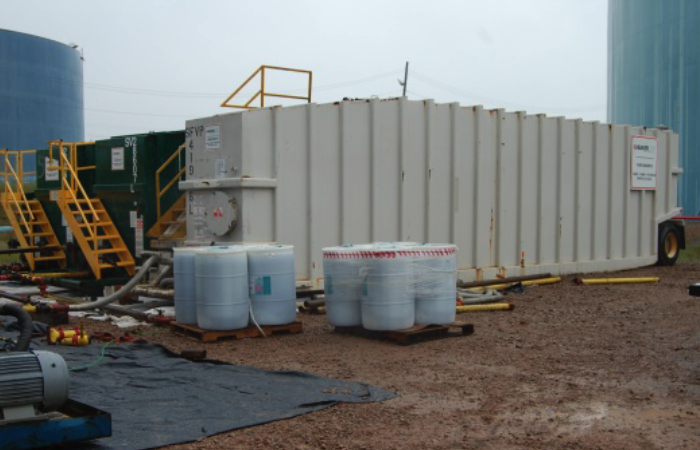
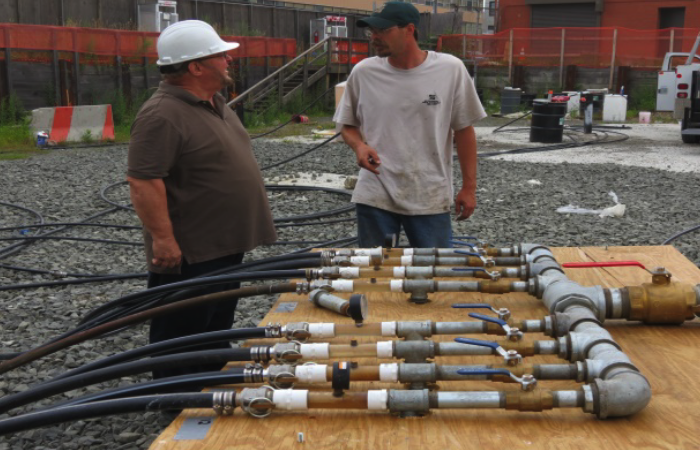
In general, no specialized equipment is required. Pinkwater can be mixed in standard poly tanks and applied with commercial pressure washing equipment for tank cleaning, vapor suppression, and surface washing applications. For in-situ remediation projects, standard equipment may include peristaltic pumps and hoses to inject into existing wells and vacuum pumps/trucks for extraction.
On larger projects, customers may design and install specialized equipment to meet the unique needs of a particular site. And customers that treat contaminated effluent on site will often use special purpose equipment, which may include oil-water separators, filters and aeration units. For more information on effluent treatment, please request an Information Sheet.
Every situation has different needs; if you have questions about estimating the amount of Pinkwater required, please consult The BioSolve® Company or your distributor. However, here are a few guidelines for some common applications:
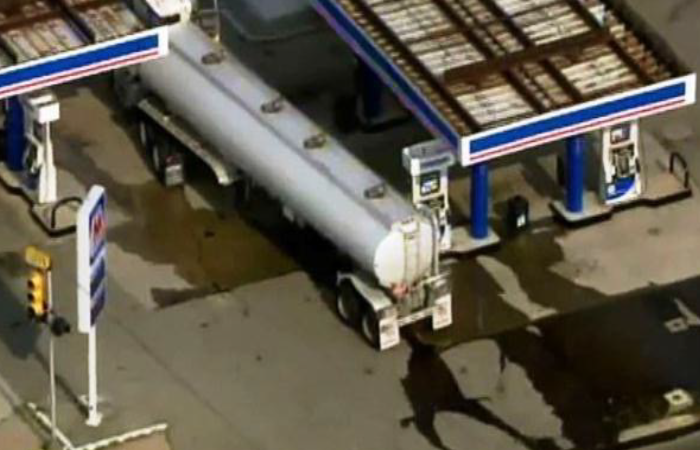
- For spill clean-up plan on using about 1 gallon of Pinkwater concentrate for every 10 to 15 gallons of spilled fuel or other light hydrocarbons.
- For in-situ remediation, plan on using enough diluted Pinkwater solution to fill one pore volume in the treatment area.
- For small tank cleaning, use one 5-gallon pail for final cleaning and degassing a 10,000 gallon fuel tank. If the tank contains a significant heel, additional Pinkwater will be required.
- Vapor suppression requirements vary widely but can be estimated based on the time (hours per day) vapor suppression is needed at the site. Use might range from 10 – 50 gallons of concentrate per full day of excavation.
Every situation requires an individualized plan, but some of the important keys to success are:
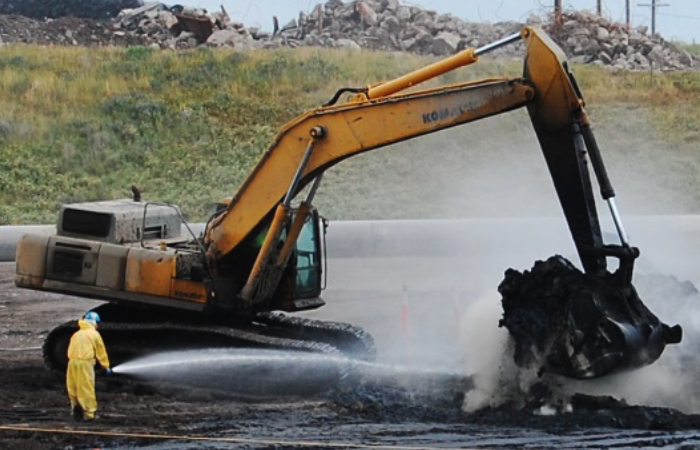
- For cleaning up surface spills, aggressive agitation is critical to fully emulsify hydrocarbons and reduce flammable vapors.
- For in-situ soil remediation, subsurface contact between Pinkwater solution and contaminated soil is required to assure successful solubilization and mobilization of hydrocarbons.
- For suppression of hazardous vapors or control of organic odors, apply Pinkwater solution to newly exposed soil and keep moist.
- For bioremediation, keep the soil moist and well mixed.
Please request application specific Information Sheets, available from The BioSolve® Company or your distributor.
Pinkwater is highly effective at mobilizing and removing residual NAPL from the soil. However, at sites also requiring the removal of dissolved phase NAPL, additional treatment will be required. One such treatment is with chemical oxidants.
The most common approach reported to us by many customers is to follow a SEAR (Surfactant Enhanced Aquifer Remediation) treatment with oxidants to achieve targeted reduction of contaminants. More recently customers have reported good results from simultaneous injection of Pinkwater with a slow release chemical oxidant.
Working with chemical oxidants can be hazardous. Always consult a licensed professional before starting any treatment involving chemical oxidants.
When used as part of an in-situ surfactant enhanced remediation project (such as SEAR), a cosolvent typically refers to an alcohol that is miscible in both water and NAPL. Alcohols (such as methanol, ethanol or propanol) will contribute to increasing NAPL solubility in water and lowering NAPL-water interfacial tension. This may be especially important when remediating heavy oil or heavily weathered light oils that are vicious and therefore not easily solubilized by a surfactant system alone.
Developing an effective remediation plan using cosolvents requires considerable knowledge and experience. Always consult a licensed professional before using cosolvents for soil remediation.
Pinkwater forms a highly stable emulsion with hydrocarbons (See “How BioSolve® Pinkwater Works”). Because Pinkwater works so efficiently, this emulsion is about 90% hydrocarbons. However, some effluent treatment systems may not be equipped to accept emulsified hydrocarbons. On the other hand, for large projects, this emulsion may be economically valuable and justify collection and reprocessing.
Effluent from soil remediation, tank cleaning or equipment decontamination can be collected and sent to an oil-water separator. At this point, citric acid can be mixed with the effluent to lower the pH, which will “break” the emulsion and release free product. Generally, about 15 – 20 lbs of citric acid per 1000 gallons of effluent will be sufficient to break the emulsion.
The free product can then be collected for reprocessing or disposal. The remaining aqueous phase will still contain a small concentration of dissolved-phase hydrocarbons and require treatment before being discharged.
Pinkwater is a water-based product and must be protected from freezing. Pinkwater concentrate will freeze at -2oC (28oF). Once frozen, Pinkwater can be thawed with no harm to performance. However, if frozen, check packaging integrity before thawing for use. If product separates after thawing, stir gently to remix.
Diluted Pinkwater solution is more than 90% water and will have a higher freezing temperature. For example, a 5% Pinkwater solution will freeze just below 0oC (32oF).
A better solution may be to keep Pinkwater above freezing temperatures overnight and mix only what can be used in a couple of hours during the day.
Unused Pinkwater concentrate, stored in its original container, may be resealed and retained for future use. Customer experience has shown that Pinkwater stored in this manner will last for at least one year (and commonly far longer). Unopened Pinkwater concentrate has a minimum 10-year shelf life.
Unused diluted Pinkwater solution should be properly disposed of.
Effluent Management & the Environment
It is always preferable to physically recover as much effluent as practical and transport it to a licensed treatment facility for disposal. In cases when contaminants treated with Pinkwater cannot be fully recovered, the effluent may be flushed into a sewer with no adverse impact to water treatment facilities.
Independent testing indicates that Pinkwater has no adverse impact on operations at wastewater treatment plants. Tests found that aerobic bacteria and spore counts were the same or higher after exposure to a 6% and a 15% solution Pinkwater for 48 hours.
If discharging Pinkwater effluent to a storm drain, dilute to less than 0.5% to avoid any adverse impact to downstream wildlife.
In all cases confirm discharge to POTW or storm sewer with local regulators before proceeding.
Toxicity testing has determined that a 5% solution of Pinkwater has “low” aquatic toxicity. The LC50 is about 70 ppm for mysid shrimp and about 125 ppm for silversides. High concentrations of Pinkwater can interfere with fish respiration. To avoid this environmental impact, always be sure Pinkwater is diluted to less than 0.5% when applied or discharged to the aquatic habitat.
As a general precaution, it is always preferable to contain effluent for treatment at a licensed facility. However, in situations where effluent may be discharged into a marine environment (subject to local regulations) or such discharge is unavoidable (as a result of an accidental spill), it is important to aggressively dilute any solution being so discharged.
BioSolve® Pinkwater has been listed under the EPA’s National Contingency Plan Product Schedule as a Surface Washing Agent
1 Pinkwater and Activator are not listed as bioremediation agents on the EPA National Contingency Plan and therefore are not to be used for bioremediation purposes on navigable waters within the US.
2 BioSolve® Pinkwater is on the U.S. Environmental Protection Agency’s NCP Product Schedule. This listing does NOT mean that EPA approves, recommends, licenses, certifies, or authorizes the use of BioSolve® Pinkwater on an oil discharge. This listing means only that data have been submitted to EPA as required by Subpart J of the National Contingency Plan, 40 CFR Section 300.915.